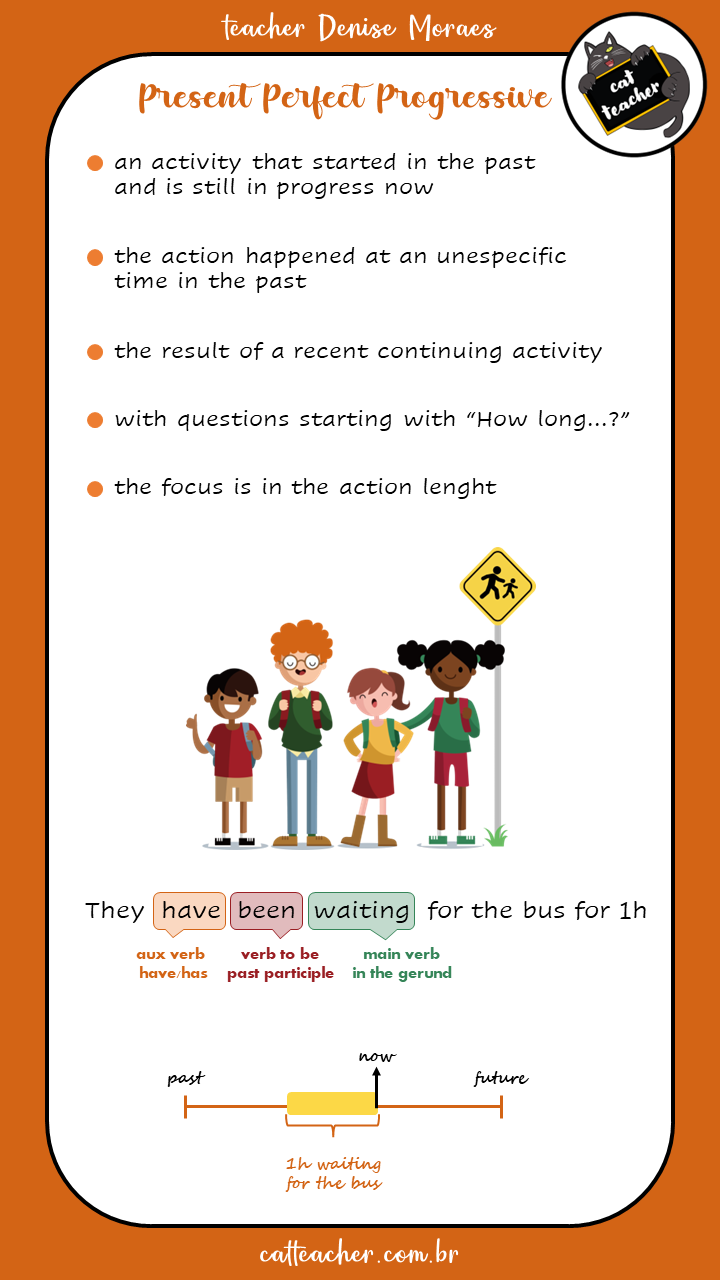
Nós usamos o Present Perfect Progressive:
🔸 para descrever uma atividade iniciada no passado que ainda está em progresso
🔸 para uma ação que aconteceu em um momento não especificado no passado
🔸 para o resultado de uma atividade recente em continuidade
🔸 com questões iniciadas por how long
🔸 quando o foco é a duração da ação
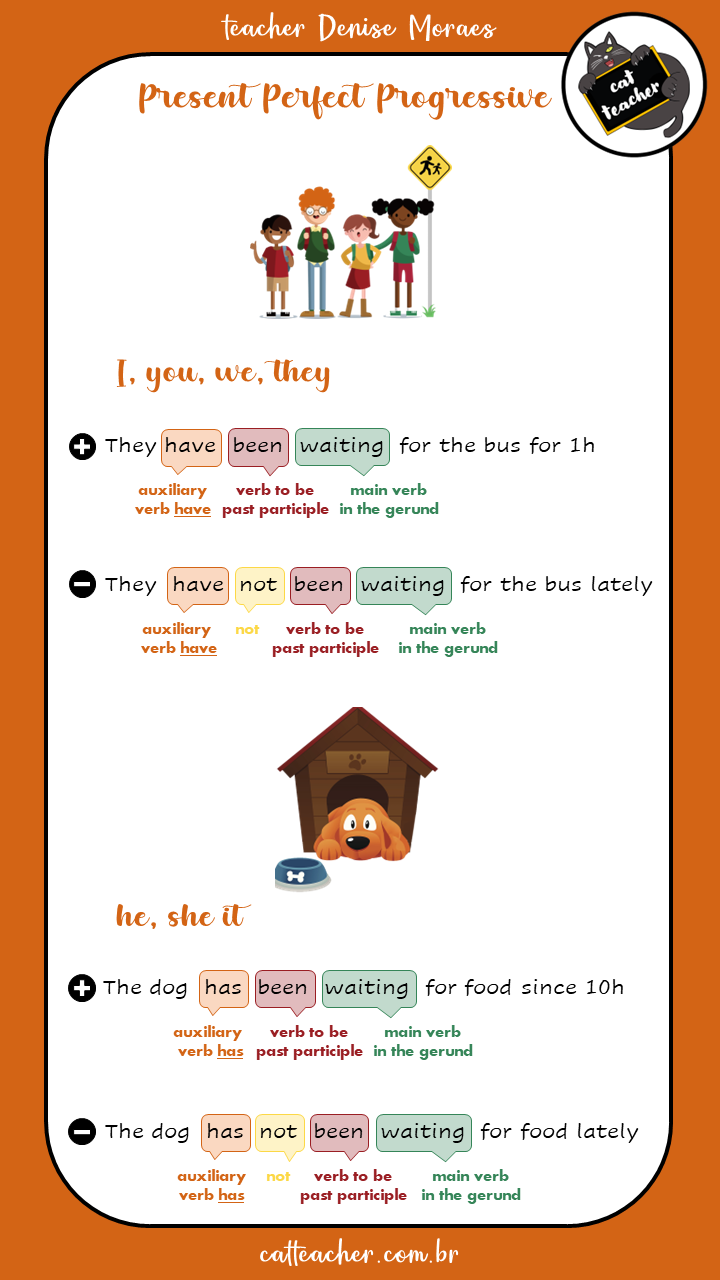
Em sentenças afirmativas, a estrutura do Present Perfect Progressive é:
noun/pronoun + have/has + been + main verb in the gerund (ING)
O verbo auxiliar have é usado com os pronomes I, you, we e they
They have been waiting for the bus for 1h. 🚌
Eles estão esperando o ônibus há 1h.
O verbo auxiliar has é usado com os pronomes he, she e it
The dog has been waiting for food since 10h. 🐶
O cachorro está esperando por comida desde as 10h.
Para sentenças negativas, usa-se o not após o verbo auxiliar ou as short forms haven’t (I, you, we, they) ou hasn’t (he, she, it).
noun/pronoun + have/has + not + been + main verb in the gerund (ING)
They have not been waiting for the bus lately. 🚌
They haven’t been waiting for the bus lately.
Eles não têm esperado o ônibus ultimamente.
The dog has not been waiting for food lately. 🐶
The dog hasn’t been waiting for food lately.
O cachorro não tem esperado por comida ultimamente.
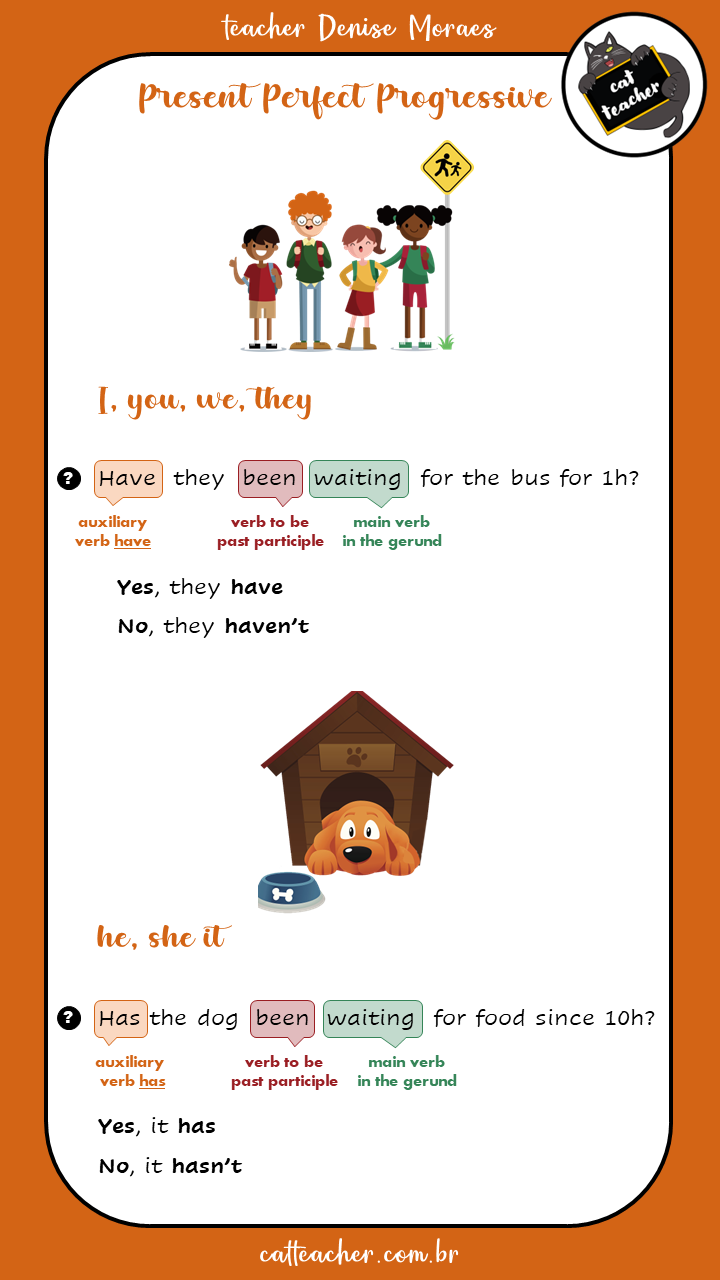
Para sentenças interrogativas, usa-se os verbos auxiliares have/has antes do noun/pronoun
Have they been waiting for the bus for 1h?
Eles estão esperando o ônibus há 1h?
Has the dog been waiting for food since 10h?
O cachorro está esperando por comida desde as 10h?
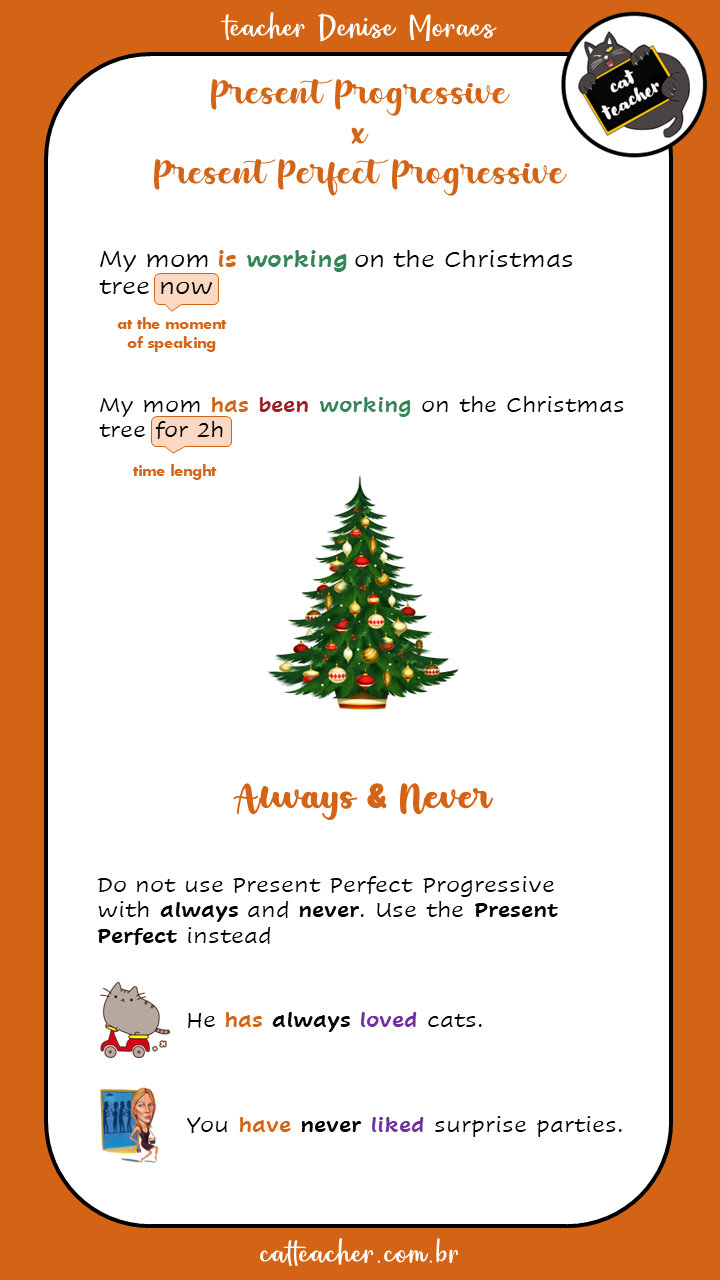
PRESENT PROGRESSIVE X PRESENT PERFECT PROGRESSIVE
O Present Progressive se foca em ações que ocorrem no momento da fala:
My mom is working on the Christmas tree now. 🎄
Minha mãe está montando a árvore de natal agora.
O Present Perfect Progressive se foca na duração da ação:
My mom has been working on the Christmas tree for 2h. 🎄
Minha mãe está montando a árvore de natal há 2h.
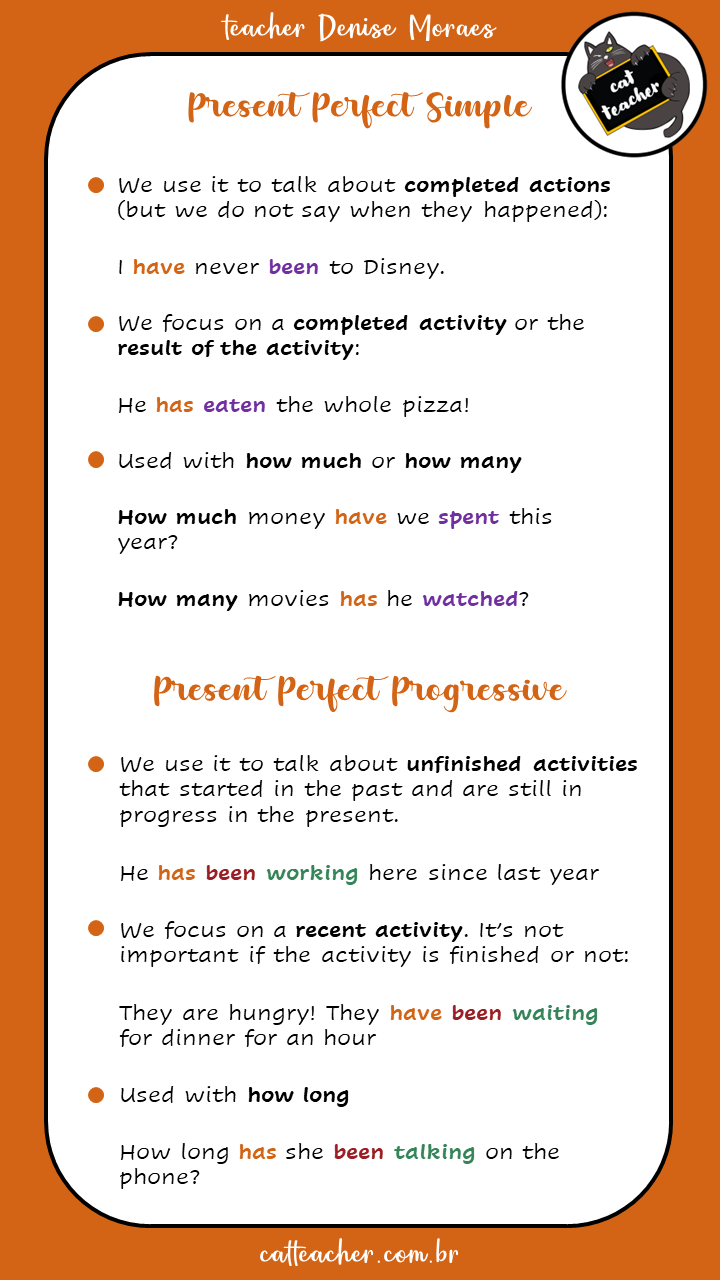
PRESENT PERFECT SIMPLE X PRESENT PERFECT PROGRESSIVE
Present Perfect Simple
🔹 Usamos para falar de ações completas (mas não dizemos quando elas ocorreram)
I have never been to Disney. 🧜♀️
Eu nunca fui à Disney.
🔹 Nós focamos na atividade concluída ou em seu resultado
He has eaten the whole pizza! 🍕
Ele comeu a pizza inteira!
🔹 Usado com how much ou how many
How much money have we spent this year? 💸
Quanto dinheiro nós gastamos neste ano?
How many movies has he watched? 🎞️
Quantos filmes ele assistiu?
Present Perfect Progressive
🔸 Usamos para falar de atividades não concluídas, que começaram no passado e ainda estão em progresso no presente
He has been working here since last year. 👷🏿
Ele está trabalhando aqui desde o ano passado.
🔸 Focamos em uma atividade recente, não importando se ela foi concluída ou não.
They are hungry! They have been waiting for dinner for an hour. 😋
Eles estão famintos! Eles estão esperando o jantar há uma hora.
🔸 Usado com how long
How long has she been talking on the phone? ☎️
Há quanto tempo ela está falando no telefone?
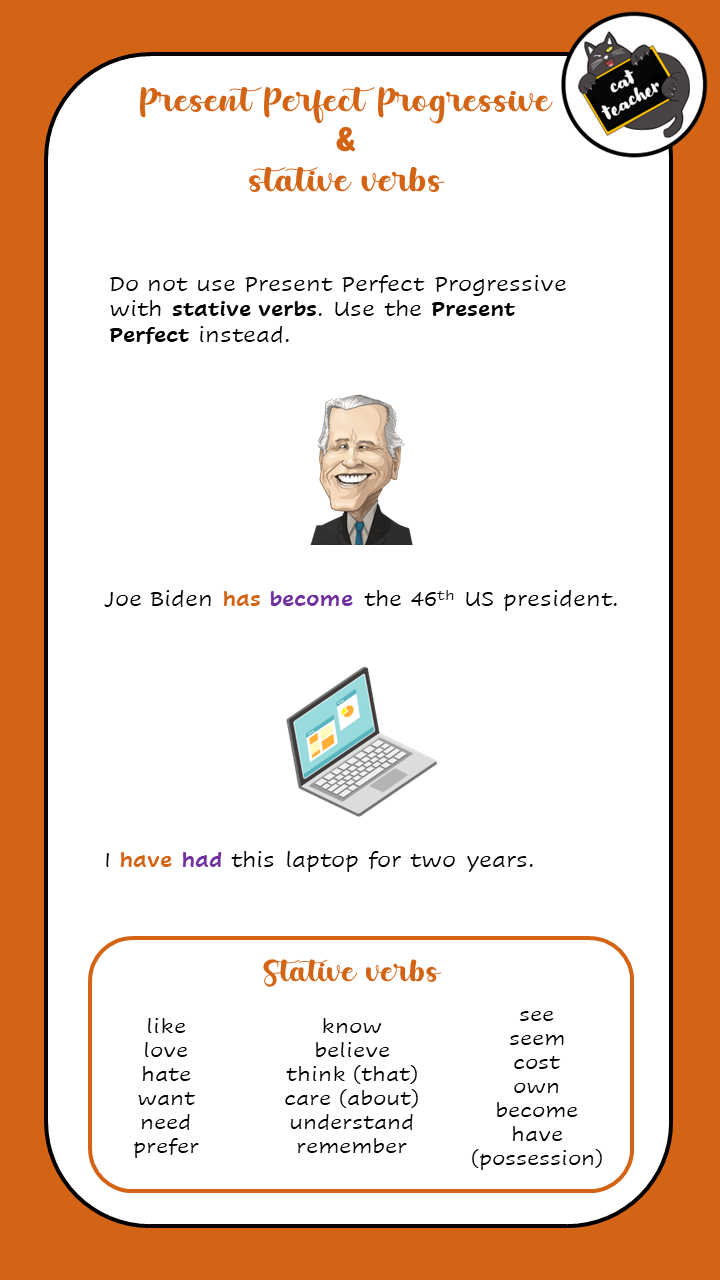
PRESENT PERFECT PROGRESSIVE X VERBOS DE ESTADO
Não use o Present Perfect Progressive com verbos de estado, use o Present Perfect Simple.
I have had this laptop for two years. 💻
Eu tenho este laptop há dois anos.
😺 Confira a íntegra na apresentação 😺

🎮 Jogo 🎮
clique na imagem para jogar