🇺🇸 version (check 🇧🇷 version bellow)
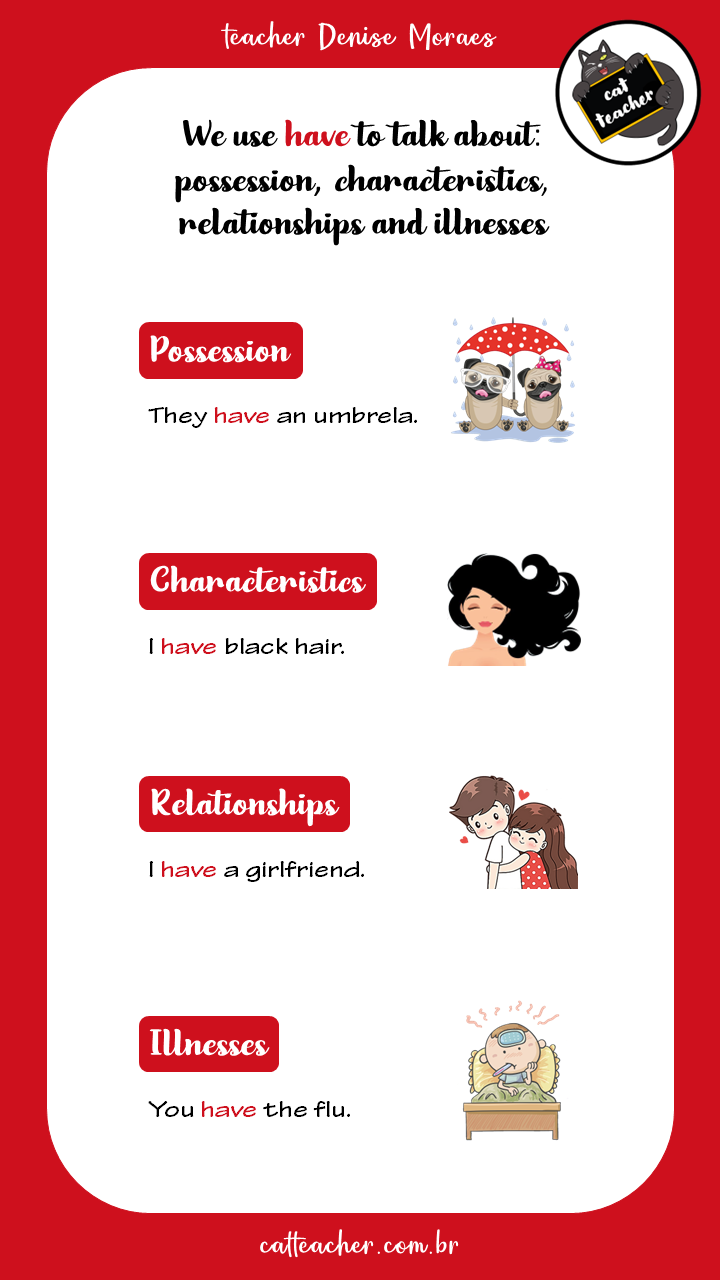
We use have/has to talk about possession, characteristics, relationships, and illnesses.
🔸 Possession
They have a red telephone. ☎️
🔸 Characteristics
She has blonde hair. 👱🏻👱🏻♀️
🔸 Relationships
You have a girlfriend. 💏
🔸 Illnesses
He has the flu. 🛌
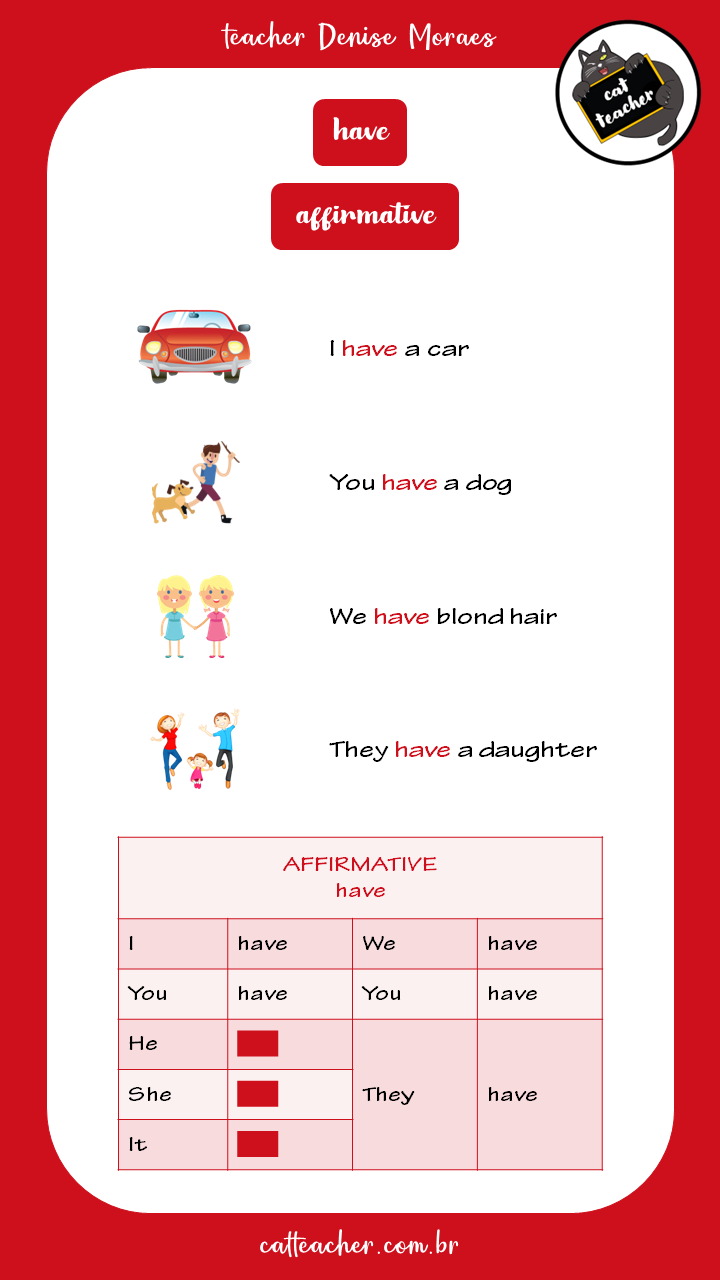
We use have with the pronouns I, you, we and they.
We use has with the pronouns he, she and it.
AFFIRMATIVE STRUCTURE
In affirmative sentences, have/has comes right after the subject (noun/pronoun).
We use have with the pronouns I, you, we and they.
We use has with the pronouns he, she and it.
noun/pronoun + have/has + complement
You have a dog. 🐕🦺
He has a dog. 🐕🦺
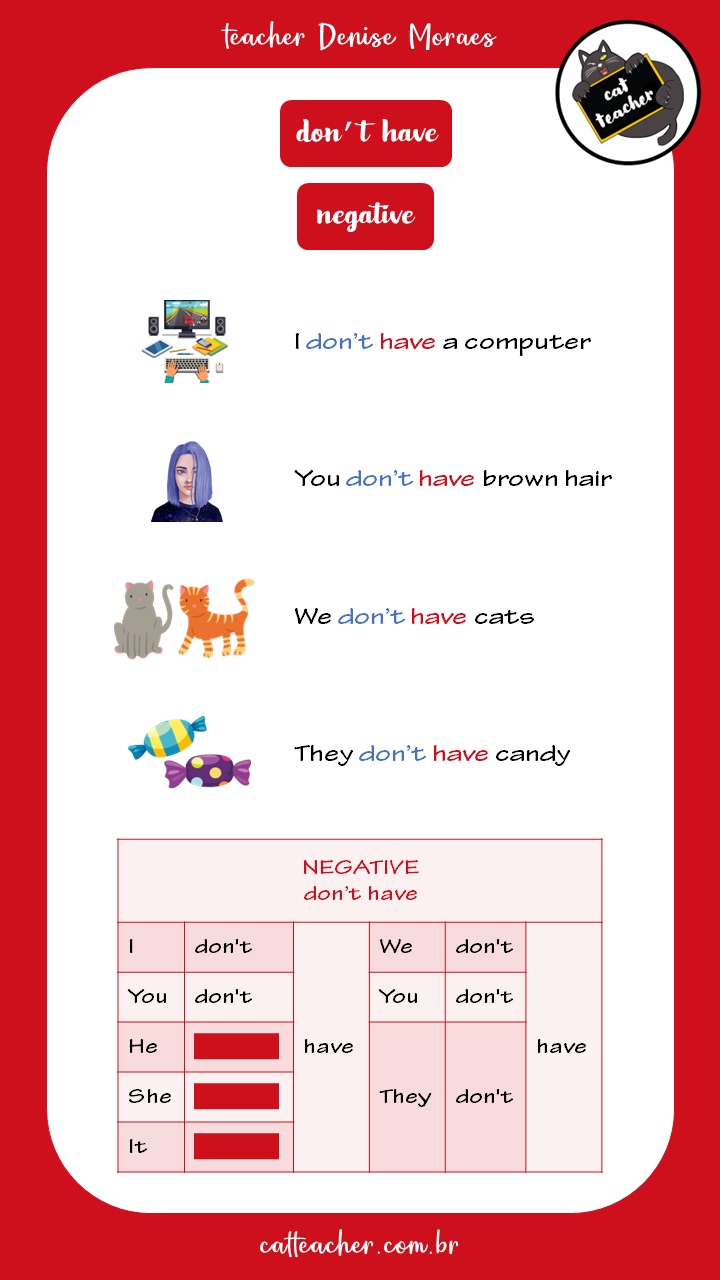
NEGATIVE STRUCTURE
In negative sentences, have/has follows an auxiliary verb.
For I, you, we and they the auxiliary verb is don’t.
For he, she and it the auxiliary verb is doesn’t.
noun/pronoun + auxiliary verb (don’t/doesn’t) + have/has + complement
Afirmative
We have cats. 🐈🐈⬛
She has cats. 🐈🐈⬛
Negative
We don’t have cats. 🐈🐈⬛
She doesn’t have cats. 🐈🐈⬛
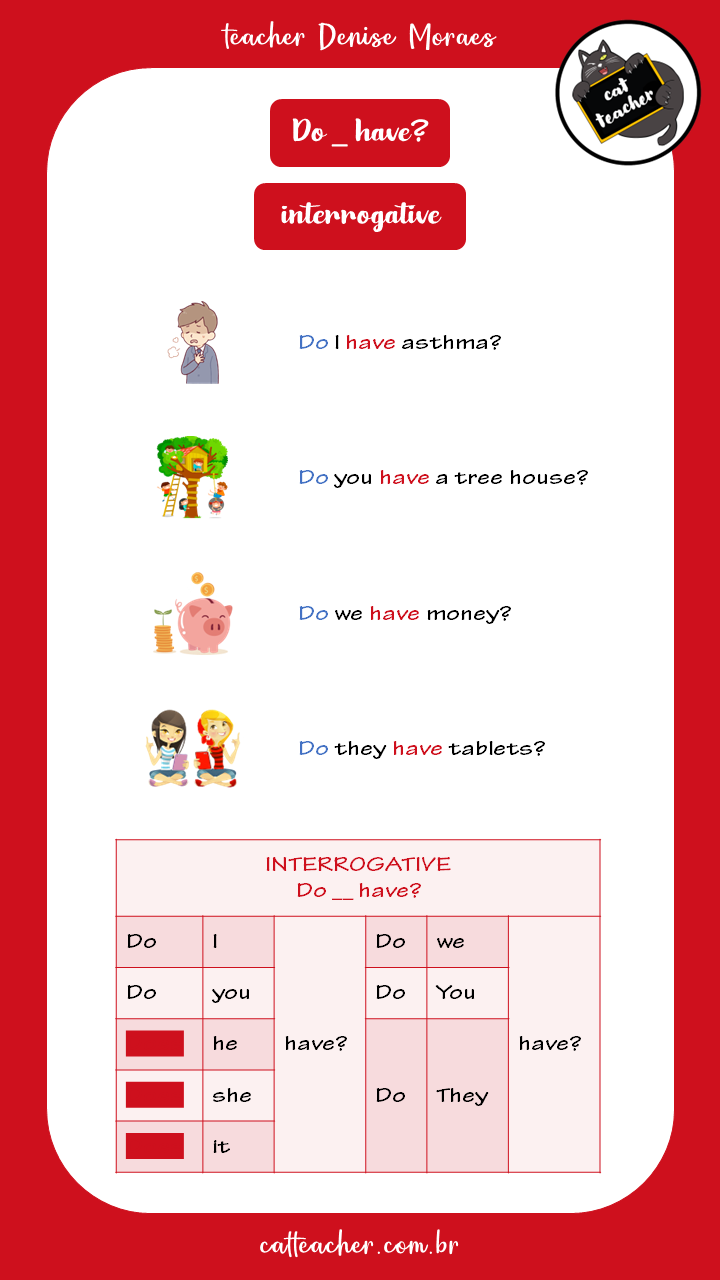
INTERROGATIVE STRUCTURE
In questions, we also use an auxiliary verb before the subject (noun/pronoun).
For I, you, we and they the auxiliary verb is do.
For he, she and it the auxiliary verb is does.
auxiliary verb (do) + noun/pronoun + have + complement?
Afirmative
They have books. 📚
He has books. 📚
Interrogative
Do they have books? 📚
Does he have books? 📚
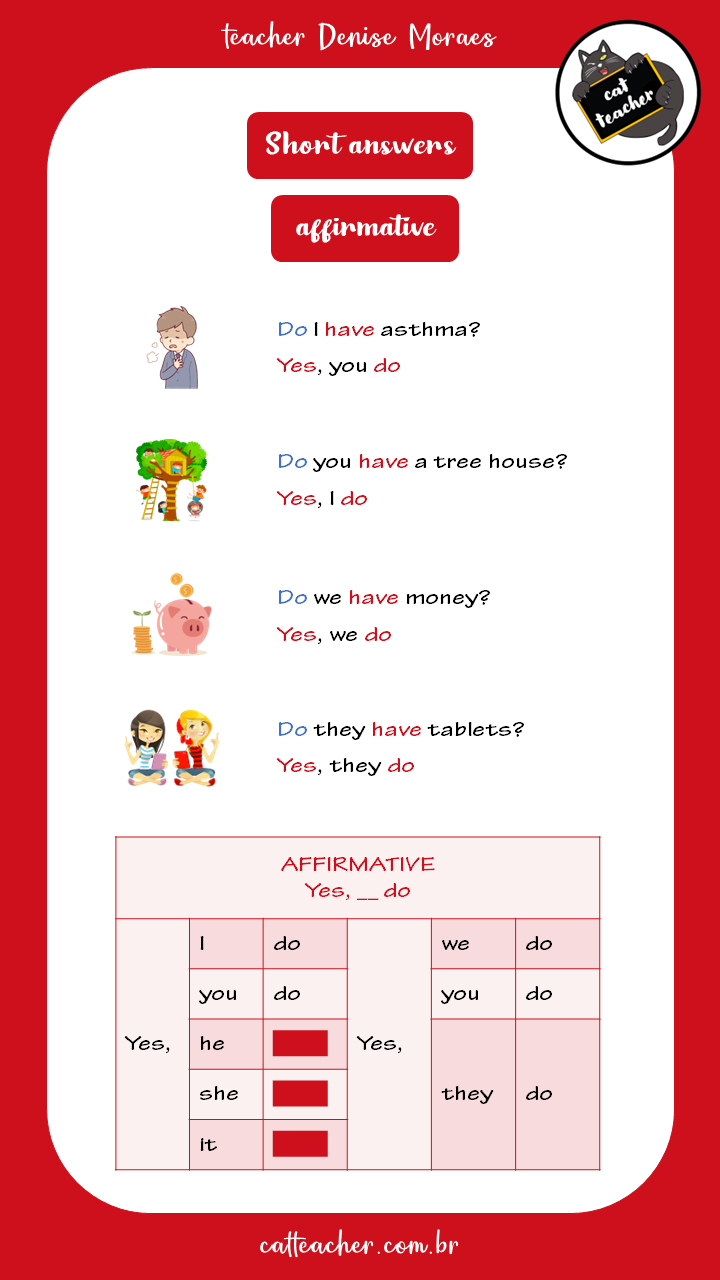
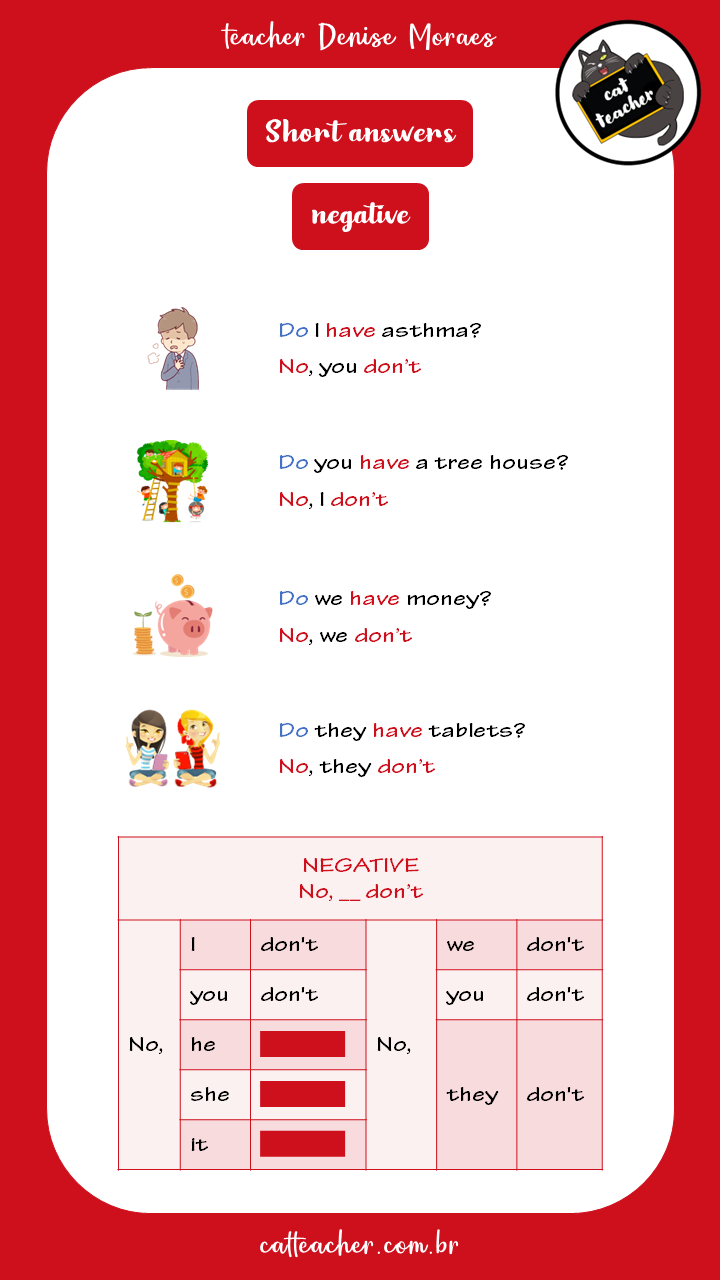
SHORT ANSWERS
Short answers use the pronoun and the auxiliary verb.
For I, you, we and they we use do for afirmative answers and don’t for negative ones.
For he, she and it we use does for afirmative answers and doesn’t for negative ones.
Do you have money? 💰
Yes, I do.
No, I don’t.
Does she have money? 💰
Yes, she does.
No, she doesn’t.
Do they have a tree house? 🌳
Yes, they do.
No, they don’t.
Does he have a tree house? 🌳
Yes, he does.
No, he doesn’t.
—————————————–
🇧🇷 version
Nós usamos have (ter) para falar sobre posse, características, relacionamentos e doenças.
🔸 Possession (posse)
They have a red telephone. ☎️
Eles têm um telefone vermelho.
🔸 Characteristics (características)
She has blonde hair. 👱🏻👱🏻♀️
Ela tem cabelo loiro.
🔸 Relationships (relacionamentos)
You have a girlfriend. 💏
Você tem uma namorada.
🔸 Illnesses (doenças)
He has the flu. 🛌
Ele tem gripe.
Nós usamos have com os pronomes I, you, we e they.
Nós usamos has com os pronomes he, she e it.
ESTRUTURA AFIRMATIVA
Na afirmativa, have/has é usado logo após o sujeito da frase (substantivo/pronome).
Nós usamos have com os pronomes I, you, we e they.
Nós usamos has com os pronomes he, she e it.
noun/pronoun + have/has + complemento
You have a dog. 🐕🦺
Você tem um cachorro.
He has a dog. 🐕🦺
Ele tem um cachorro.
ESTRUTURA NEGATIVA
Na negativa, have/has é usado após o que chamamos de verbo auxiliar.
Para os pronomes I, you, we e they o verbo auxiliar é don’t.
Para os pronomes he, she e it o verbo auxiliar é doesn’t.
noun/pronoun + auxiliary verb (don’t/doesn’t) + have/has + complemento
Afirmativa
We have cats. 🐈🐈⬛
Nós temos gatos.
She has cats. 🐈🐈⬛
Ela tem gatos.
Negativa
We don’t have cats. 🐈🐈⬛
Nós não temos gatos.
She doesn’t have cats. 🐈🐈⬛
Ela não tem gatos.
ESTRUTURA INTERROGATIVA
Na interrogativa, também se usa um verbo auxiliar antes do substantivo/pronome da frase.
Para os pronomes I, you, we e they o verbo auxiliar é do.
Para os pronomes he, she e it o verbo auxiliar é does.
auxiliary verb (do/does) + noun/pronoun + have/has + complemento
Afirmativa
They have books. 📚
Elas têm livros.
He has books. 📚
Ele tem livros.
Interrogativa
Do they have books? 📚
Elas têm livros?
Does he have books? 📚
Ele tem livros?
SHORT ANSWERS
As short answers são feitas com o pronome e o verbo auxiliar.
Para os pronomes I, you, we e they usa-se o verbo auxiliar do em caso de resposta afirmativa e don’t na resposta negativa.
Para os pronomes he, she e it usa-se o verbo auxiliar does em caso de resposta afirmativa e doesn’t na resposta negativa.
Do you have money? 💰
Yes, I do.
No, I don’t.
Você tem dinheiro?
Sim, eu tenho.
Não, eu não tenho.
Does she have money? 💰
Yes, she does.
No, she doesn’t.
Ela tem dinheiro?
Sim, ela tem.
Não, ela não tem.
Do they have a tree house? 🌳
Yes, they do.
No, they don’t.
Eles têm uma casa de árvore?
Sim, eles têm.
Não, eles não têm.
Does he have a tree house? 🌳
Yes, he does.
No, he doesn’t.
Ele tem uma casa de árvore?
Sim, ele tem.
Não, ele não tem.
😺 Confira a íntegra na apresentação 😺

📚 Get the full course on Kahoot! 📚

A complete pack with theory, practice, and ready-to-use games.